

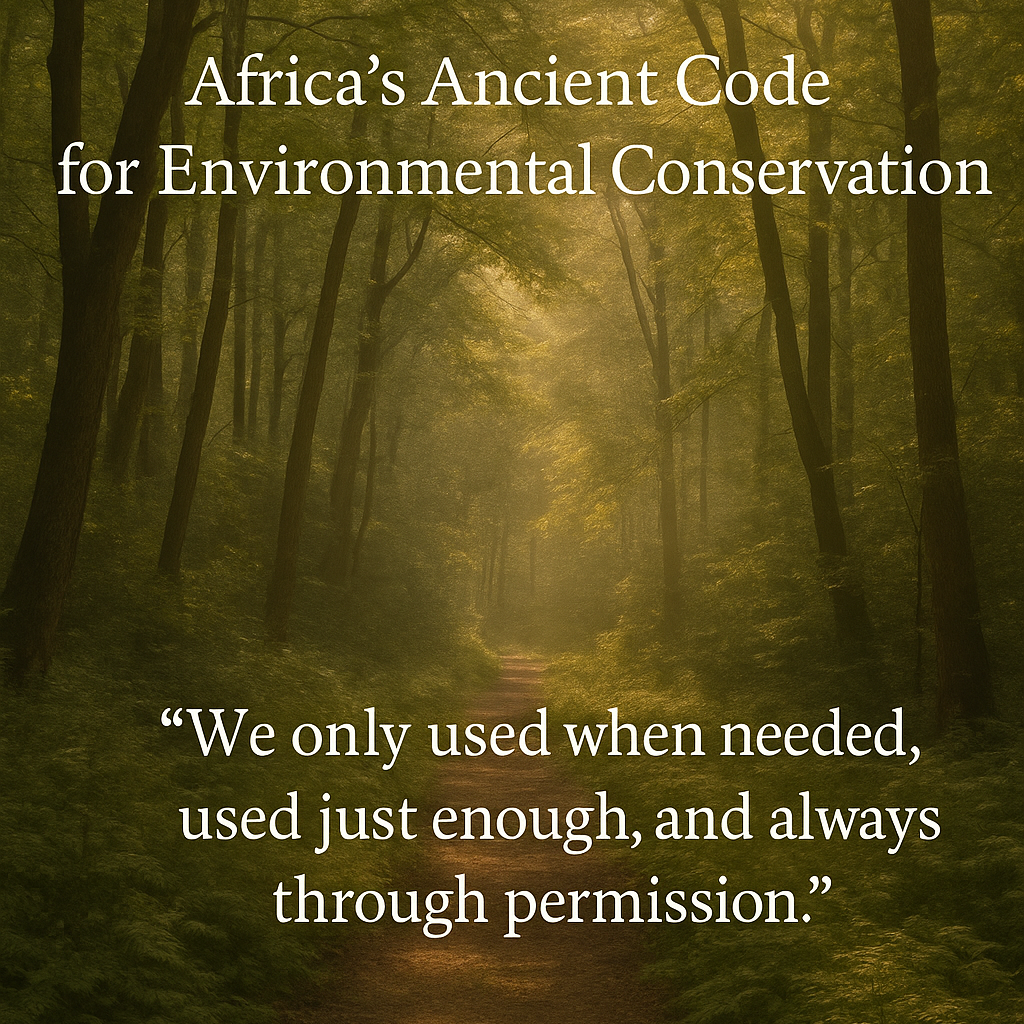
Long before modern laws and environmental campaigns, African communities protected the environment through a sacred system of taboos. These deeply held cultural beliefs weren’t just moral codes—they were practical, spiritual, and environmental safeguards passed from generation to generation. In many African societies, nature was not something to be conquered but to live with respectfully. Certain rivers were considered sacred, specific animals were seen as clan totems, and some trees or forests were only approached through ritual and reverence. It was understood: that we only used when needed, used just enough, and always through permission—from elders, ancestors, or the spirits believed to inhabit the natural world. These taboos helped regulate hunting, farming, and harvesting. In Uganda, for instance, sacred groves were preserved by communities that believed disturbing them would bring misfortune. Across West Africa, water bodies were protected by stories of water spirits, ensuring no pollution or overuse. These beliefs ensured balance—a form of unwritten environmental law. Today, as climate change and deforestation threaten ecosystems worldwide, these traditional practices remind us of an ancient truth: conservation begins with respect. And Africa, through its taboos and traditions, offers a timeless model of living in harmony with nature—rooted in ancestral wisdom and sustainable living.

Comment (0)